Current national averages for dry van, reefer and flatbed, the average cost to run a truck, and a simple way to tell whether any load's rate per mile is worth taking.
A good rate per mile in 2026 is one that covers your real cost per mile, including deadhead, and leaves a profit. ATRI's latest study puts the average cost to run a truck at $2.336 per mile, so that's the floor most carriers measure against. Reefer and flatbed loads usually pay more per mile than dry van, but they also cost more to run.
Key takeaways
- Know your own cost per mile first. The industry average is a guide, not your number.
- Reefer and flatbed usually pay more per mile than dry van, but they also cost more to run.
- Always count deadhead miles. A strong rate on loaded miles can turn weak once you add the empty miles.
- Spot rates change every week, so check current lane data before you accept or counter.
Current rates per mile by equipment
Published industry reports track national average spot rates every week. For the week of September 27 to October 3, 2026, the averages were:
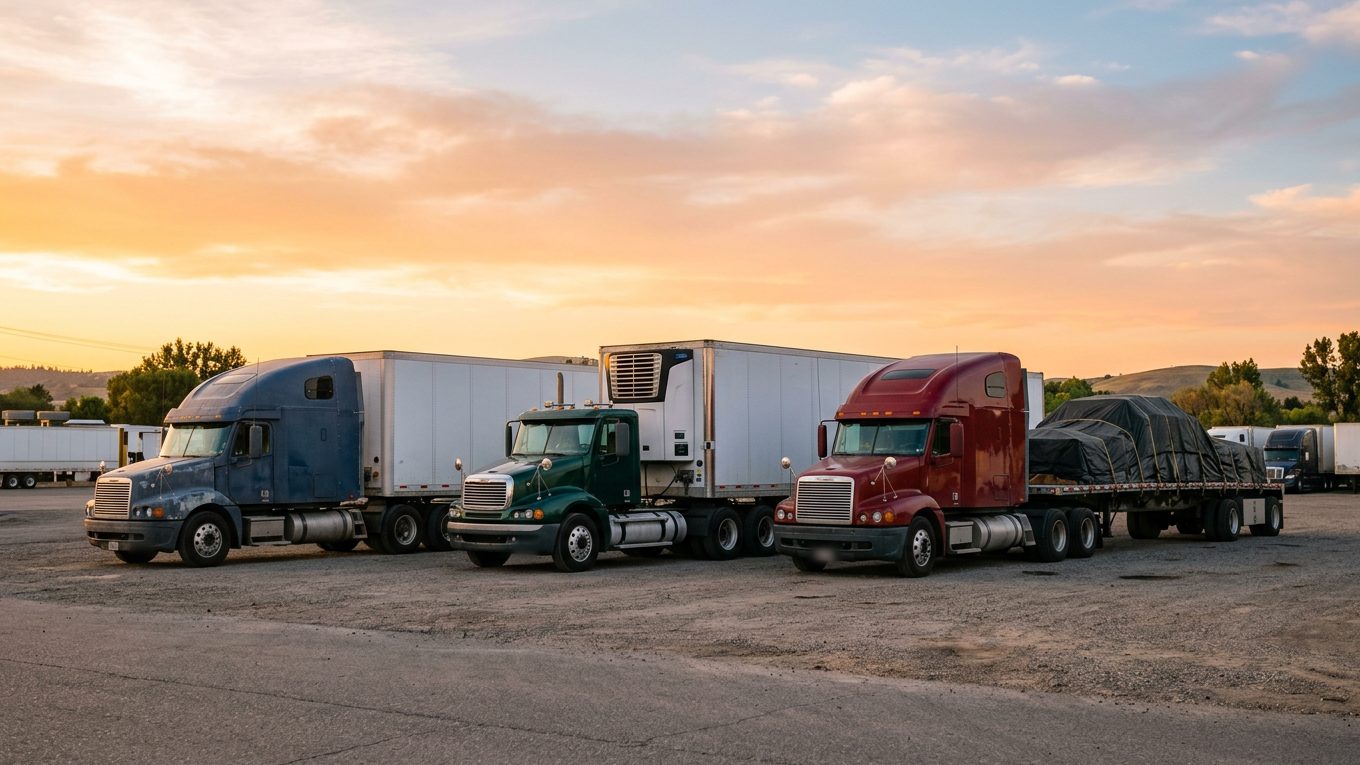
- Dry van: about $3.13 per mile with fuel, or $2.25 linehaul without fuel. See current dry van loads.
- Reefer: about $3.69 per mile with fuel, or $2.74 linehaul. See current reefer loads.
- Flatbed: about $3.71 per mile with fuel, or $2.65 linehaul. See current flatbed loads.
Mid-October reports showed linehaul rates holding close to those levels. National averages are only a starting point. Rates on a single lane can be far above or below the average depending on direction, season and how many trucks are in the area.
What about box trucks, hotshots and power only?
Smaller equipment and specialty freight don't have one widely used national average, and rates vary a lot by lane and load size. For these, compare offers on the same lane over a few weeks and price from your own costs. Our guide on dry van vs reefer vs flatbed earnings explains why some equipment pays more.
Spot rates vs contract rates
The numbers above are spot rates, the prices brokers pay for one-time loads booked on load boards. Contract rates are set in advance for regular lanes, often for months at a time.
Contract rates move more slowly. When the spot market is weak, contract freight usually pays more and gives steady work. When capacity gets tight, spot rates can jump above contract rates within weeks. Many small carriers mix both: steady lanes from a few brokers or shippers, plus spot loads to fill gaps and reposition the truck.
Start with your own cost per mile
A rate is only good if it beats what it costs you to run the truck. ATRI's 2026 operational costs report, based on 2025 data, put the average at $2.336 per mile, or $1.854 per mile without fuel. Small carriers can be higher or lower, depending on truck payments, insurance, fuel economy and how many miles they run.
Add up everything you pay in a month, including fixed costs like truck payments, insurance and permits, plus variable costs like fuel, tires, maintenance and driver pay. Divide by the total miles you drive, loaded and empty. Our step-by-step guide on calculating your real cost per mile walks through the math.
How to judge any load's rate
Count all the miles
Divide the total pay by loaded miles plus deadhead miles, not loaded miles alone. Here's an example with simple numbers:
- The load pays $2,000 for 600 loaded miles. That looks like $3.33 per mile.
- You drive 150 empty miles to the pickup. Now it's $2,000 for 750 miles, or $2.67 per mile.
- If your cost is $2.30 per mile, you keep about $0.37 per mile before any time spent waiting.
Look at where the load leaves you
A load into a strong freight market can be worth a slightly lower rate, because the reload pays well and comes quickly. A high rate into an area with little outbound freight can cost you a long deadhead or days of waiting. Our list of top freight lanes in the U.S. shows which markets tend to have strong outbound freight.
Factor in time, not just miles
Short loads, long waits at the dock and tight appointments eat hours. Ask about detention and layover pay, and get them in writing on the rate confirmation.
Some carriers also track revenue per day. A short load at a high rate per mile can earn less in a day than a longer run at a lower rate, once you count loading time and waiting.
Check the broker, not just the rate
A high rate from a broker who pays in 60 days, or not at all, is not a good rate. Check the broker's credit score and days to pay before you book.
What makes rates go up or down
- Season: produce season lifts reefer rates, construction season lifts flatbed, and retail peaks lift dry van in the fall.
- Lane direction: outbound rates from busy freight markets are usually higher than rates going back.
- Load-to-truck ratio: when there are many loads for each available truck, rates rise. In early October 2026, flatbed had far more loads per available truck than van or reefer.
- Fuel prices: fuel surcharges move all-in rates up and down even when linehaul rates stay flat.
- Weather and events: storms, holidays and enforcement weeks can tighten capacity for days.
How to find and negotiate better rates
- Know your minimum before you call. Set a walk-away rate per total mile for each lane.
- Filter out low-paying loads. On the Just Tracking free load board, every load shows the rate and rate per mile, and you can search by minimum rate and minimum rate per mile.
- Counter with a rate offer. If a load is close but too low, send your own rate on the load instead of passing.
- Be first. Set load alerts for your lanes so you see good loads before other carriers book them.
- Build repeat lanes. Brokers pay more to carriers they trust on lanes they run every week.
Frequently Asked Questions
What is a good rate per mile for a dry van in 2026?
The national average spot rate was about $3.13 per mile with fuel in early October 2026. A good rate for you is one that beats your own cost per mile, including deadhead, with room for profit.
Should rate per mile include fuel?
Compare like with like. All-in rates include fuel, while linehaul rates don't. Most carriers judge loads on the all-in rate divided by total miles, including deadhead.
Why do reefer and flatbed pay more than dry van?
Reefer and flatbed need extra equipment, skills and time, such as temperature control or securing and tarping freight. Their costs are also higher, so the higher rate doesn't always mean higher profit.
How often do rates per mile change?
Spot rates change every day and are reported weekly. Contract rates change less often, usually when shippers rebid their freight.
What is the average cost per mile to run a truck?
ATRI's 2026 report put the average at $2.336 per mile for 2025, including fuel. Your own cost can be quite different, so calculate it from your own expenses.
Find loads that pay what you need
Stop guessing whether a load is worth it. Sign up for Just Tracking for free to see the rate per mile on every load, set your minimum and get alerts when good loads hit your lanes.