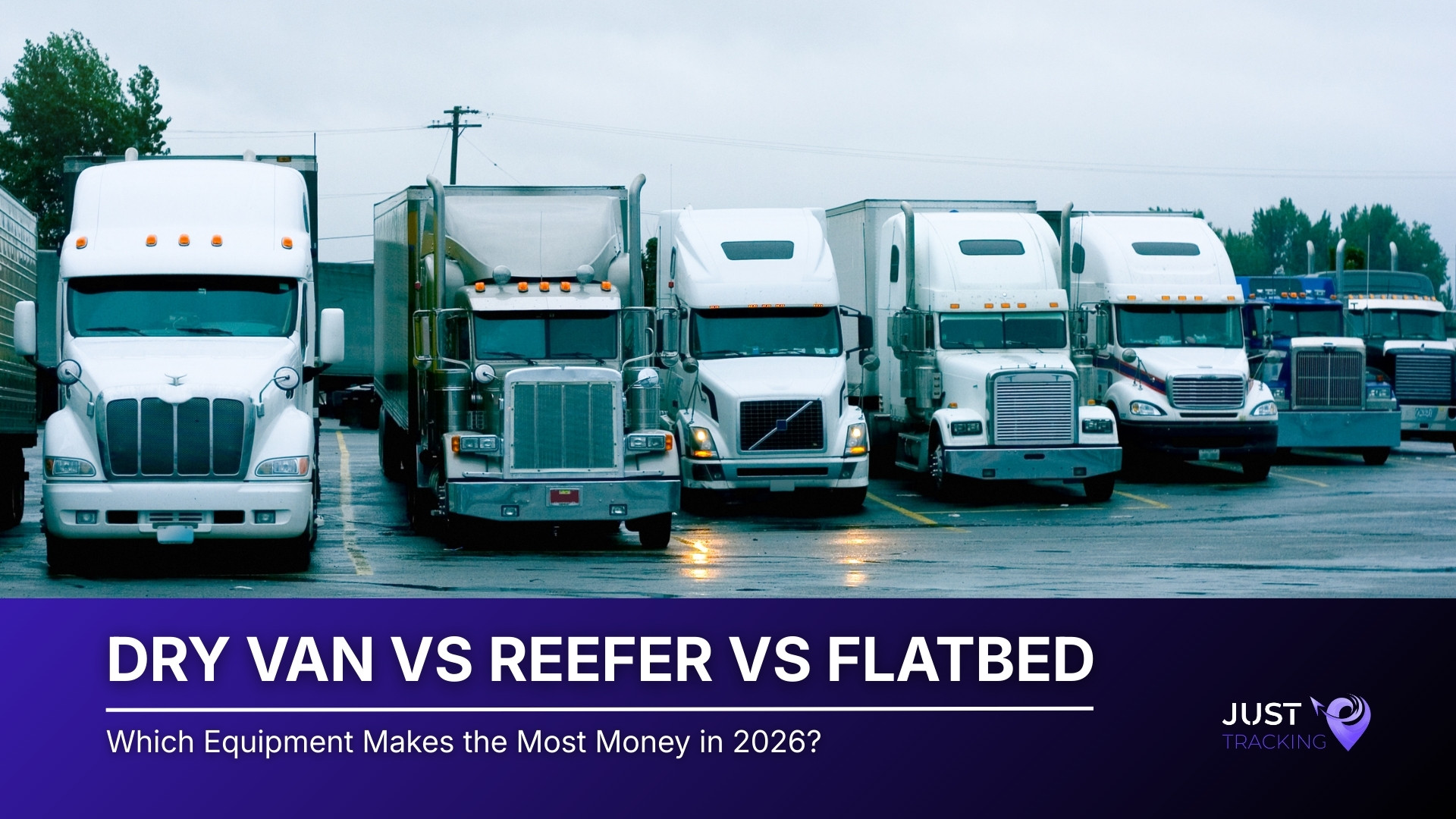
If you’re planning to buy a trailer in 2026—or thinking about switching equipment—one question matters more than anything else: which trailer type actually makes the most money?
Dry van, reefer, and flatbed each operate in different freight ecosystems. They come with different rate structures, operating costs, seasonality patterns, and risk levels.
Let’s break it down in real terms.
The 2026 Freight Market Reality
Before comparing equipment types, we need context.
The freight market has normalized after the extreme volatility of 2020–2022. Rates are more disciplined. Margins are tighter. Shippers are more cost-conscious. Capacity has stabilized but remains competitive in most regions.
In 2026, profitability depends less on chasing high-paying spot loads and more on:
- Cost control
- Contract freight stability
- Specialized positioning
- Operational discipline
Now let’s compare.
Dry Van: The Volume King (But Margin Sensitive)
Dry van freight remains the backbone of the trucking industry. It covers retail goods, packaged products, non-perishable food, and general freight.
Why drivers choose dry van:
- Lower equipment cost compared to reefer
- Simpler operations (no temperature control)
- Massive freight availability
- Easier entry into the market
The downside:
Dry van is the most competitive segment. Because the barrier to entry is lower, rate pressure is constant especially in the spot market.
2026 outlook:
Dry van rates are stable but not explosive. Contract freight is where profitability lives. Carriers who rely heavily on the spot market may struggle with thin margins.
Best for:
Carriers who prioritize steady volume, lower maintenance complexity, and predictable lanes.
Reefer: Higher Rates, Higher Costs
Reefer freight involves temperature-controlled goods such as food, pharmaceuticals, and sensitive products.
Why reefer often earns more:
- More specialized service
- Higher demand during produce seasons
- Fewer carriers compared to dry van
Reefer rates are typically higher per mile than dry van rates. But that doesn’t automatically mean higher profit.
Hidden realities:
- Fuel costs increase (reefer unit burns fuel)
- Maintenance costs are higher
- Breakdowns can be expensive
- Compliance standards are stricter
In strong produce markets, reefer can outperform dry van significantly. But when freight slows, operating costs don’t disappear.
2026 outlook:
Reefer remains profitable for disciplined operators with solid maintenance programs and consistent freight contracts.
Best for:
Carriers comfortable managing additional operational complexity for higher gross revenue potential.
Flatbed: Specialized and Relationship-Driven
Flatbed freight covers construction materials, machinery, steel, lumber, and oversized freight.
Flatbed rates can be strong, often higher than dry van, because the work requires more skill, securement knowledge, and physical labor.
Why flatbed can outperform:
- Less oversaturation compared to dry van
- Industrial and infrastructure demand
- Higher pay for specialized or oversized loads
Consider the trade-offs:
- Physical demands are higher
- Freight can be seasonal (construction cycles)
- Weather impacts operations
- Tarping and securement add time
Flatbed tends to reward experience and strong broker or shipper relationships.
2026 outlook:
With ongoing infrastructure development and regional industrial growth, flatbed remains a solid profit option, especially in construction-heavy regions.
Best for:
Experienced drivers who want stronger rate potential and are comfortable with hands-on freight.
Which Equipment Makes the Most Money in 2026?
The honest answer: it depends on your cost structure and freight strategy.
Here’s a simplified comparison:

If you measure purely by gross revenue per mile, reefer often leads.
If you measure by simplicity and stability, dry van wins.
If you measure by rate strength and specialization, flatbed stands out.
In 2026, profitability is less about equipment type and more about:
- Securing direct shipper contracts
- Reducing deadhead miles
- Controlling fuel and maintenance costs
- Avoiding over-reliance on the spot market
Equipment gives you positioning. Strategy determines income.
How to Choose the Right Trailer for Your Business
Before deciding between dry van, reefer, or flatbed, ask yourself:
- Do you want operational simplicity or higher revenue potential?
- Are you prepared for higher maintenance costs?
- What freight is strong in your region?
- Are you building long-term contracts or living on load boards?
The most profitable carriers in 2026 are not chasing equipment trends. They’re aligning equipment with their market.