What deadhead miles are, what they really cost, how to calculate your rate per total mile, and 10 practical ways carriers and dispatchers can cut empty miles.
Deadhead miles are the miles a truck drives empty, usually from a delivery to the next pickup or back home. To reduce deadhead miles, plan your next load before you deliver, search for loads near your delivery point, set load alerts for your return lanes, avoid markets with little outbound freight, and build broker and shipper relationships that give you reloads. Every empty mile you cut adds straight to your profit.
Key takeaways
- Deadhead miles cost almost as much as loaded miles but earn nothing.
- ATRI research put deadhead at 16.5% of miles for non-tank fleets in 2025.
- Judge every load by its rate per total mile, including deadhead, not just loaded miles.
- Planning the reload before you book is the most effective way to cut empty miles.
What are deadhead miles?
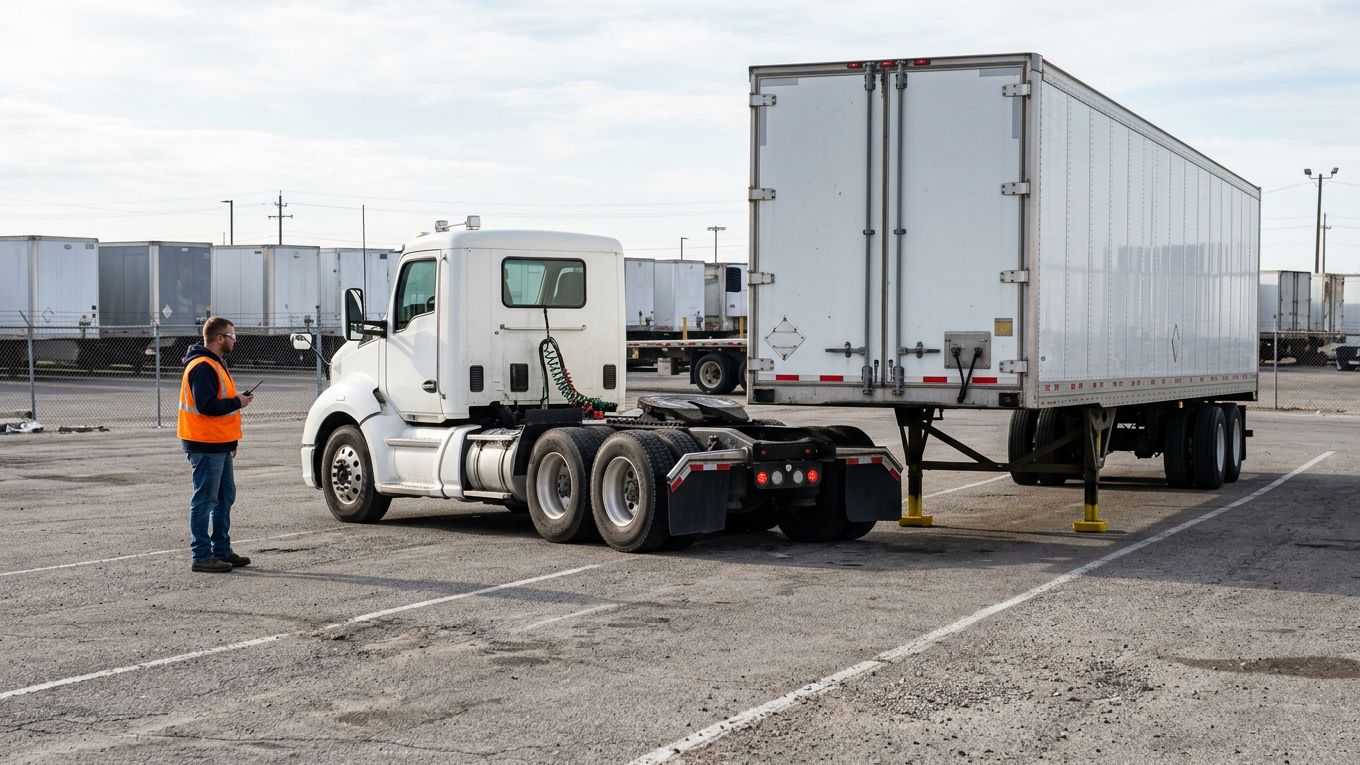
Deadhead miles are miles driven with an empty trailer, or with no paying freight. The most common types are:
- Driving from a delivery to the next pickup.
- Returning home or to your terminal empty.
- Moving to a stronger market to find freight.
Bobtailing is similar but means driving the tractor with no trailer at all. Both burn fuel, wear tires and use up hours of service without earning revenue.
What deadhead really costs you
Most costs keep running whether the trailer is loaded or empty: fuel, maintenance, tires, insurance, truck payments and driver time. ATRI's latest operational cost report put the average cost of running a truck at $2.336 per mile in 2025.
Here's a rough example. If your truck runs 100,000 miles a year and 16.5% of them are empty, that's 16,500 miles with no pay. At $2.336 per mile, those empty miles cost about $38,500. Cutting deadhead by even a few points can add thousands of dollars to your year. To find your own number, follow our guide on calculating your cost per mile.
How to calculate your rate per total mile
A load that looks good on loaded miles can lose money once you add deadhead. Use this simple formula:
- Rate per total mile = load pay ÷ (loaded miles + deadhead miles)
For example, a $2,000 load with 800 loaded miles pays $2.50 per loaded mile. Add 150 deadhead miles to the pickup, and it pays about $2.11 per total mile. Compare that to your cost per mile before you book. Our guide to a good rate per mile shows typical numbers by equipment.
10 ways to reduce deadhead miles
1. Plan the reload before you book
Before you accept a load, look at the delivery area. Is there freight going out, and does it pay? A slightly cheaper load into a strong market often earns more over the week than a high-paying load into a dead end.
2. Search close to your delivery
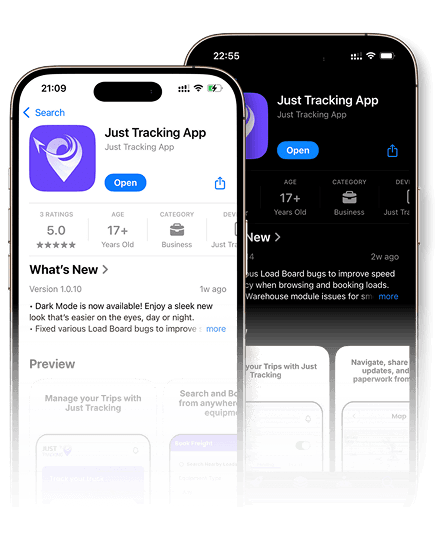
Search for your next load by origin and deadhead distance, so you only see freight near where you'll be empty. On the free load board, Just Tracking lets you search by origin and destination with deadhead, plus equipment, pickup date and minimum rate per mile.
3. Set load alerts for your return lanes
Don't wait until you're empty to start looking. Set load alerts for the lanes back toward home or your next strong market, and you'll be notified on the web or in the app as soon as a matching load posts.
4. Avoid dead-end markets
Some areas receive far more freight than they ship out, especially for certain equipment types. Learn which markets are strong for your trailer type. Our look at the top freight lanes in the US is a good place to start.
5. Run triangle routes
Instead of running out and back on one lane, plan three-leg routes that connect strong markets. For example, deliver to a market with weak return freight, take a short load to a nearby hub, then load back toward home.
6. Ask brokers for reloads
When you book a load, ask the broker if they have anything out of the delivery area. Brokers who move freight on both ends of a lane can keep your truck loaded, and they remember carriers who deliver on time.
7. Let brokers find you when you're empty
Turn on Ready Now in the Just Tracking driver app when you're empty. Your truck shows live on the Available Trucks map with its type and location, so brokers with freight nearby can contact you directly.
8. Fill gaps with partial loads
If a full load isn't available, a partial load going your way can cover fuel and get you closer to a better market. Search for partial loads alongside full truckloads.
9. Build direct shipper relationships
Regular customers on both ends of your lanes give you predictable reloads. Even one or two shippers near home can turn empty return trips into paid ones.
10. Plan your week, not just the next load
Map out where you want to be at the end of the week, including home time, and choose loads that move you in that direction. Planning several loads ahead keeps you from chasing one good rate into a market where you'll sit empty for a day.
When deadhead is worth it
Sometimes driving empty is the right call. Deadheading 100 miles to a strong market can pay more than taking a cheap load that leaves you stuck. Before you decide, compare the rate per total mile of each option, the freight available after delivery, and how many hours of service you'll use. Deadheading can also make sense to get home on time or to reach a regular shipper who pays well and loads fast. Just make it a choice you've priced out, not a habit.
How dispatchers cut deadhead for their carriers
Good dispatchers plan the next load before the current one delivers. With load tracking, they see each truck live, along with stop check-ins and delivery times, so they know when and where the truck will be empty. That makes it easier to book the next pickup close by. Dispatchers can use Just Tracking for free, with the load board, load alerts and tracking in one place. See our tools for dispatchers.
Frequently Asked Questions
What is a deadhead mile in trucking?
A deadhead mile is a mile driven with an empty trailer or no paying freight. It usually happens between a delivery and the next pickup.
What is a good deadhead percentage?
Lower is better. ATRI research put non-tank deadhead at 16.5% of miles in 2025, which is a useful benchmark to compare against your own numbers.
Do brokers pay for deadhead miles?
Usually not as a separate line item. Some brokers pay more for loads in remote areas or short loads that need long deadhead, so negotiate the rate with deadhead in mind.
How do I track my deadhead miles?
Compare empty miles to total miles from your ELD, fuel or trip records each month. Divide deadhead miles by total miles to get your deadhead percentage.
What's the difference between deadhead and bobtail?
Deadhead means driving with an empty trailer. Bobtail means driving the tractor with no trailer attached.
Cut your empty miles today
Search loads near your delivery, set alerts for your return lanes and see broker credit on every load. Sign up for free and start planning your next reload.