Learn how freight brokers can cover spot loads in 15 minutes, compare market rates, find available carriers, and avoid costly booking mistakes.
For freight brokers, speed matters. But the fastest truck isn't always the right truck, and the lowest rate isn't always the best deal.
It's 3:42 p.m. A shipper calls with a last-minute pickup. The freight needs to move today, the appointment window is tight, and the carrier who usually covers that lane isn't answering.
You have a few options: start calling down your carrier list, post the load and wait for responses, or offer more money and hope someone takes it.
That's where spot freight gets expensive.
The problem isn't always a lack of available trucks. Sometimes it's the time spent finding the right one, comparing rates, confirming availability, and making sure the carrier can actually handle the shipment.
A better approach is to make those decisions in a deliberate order.
With current market information, access to available capacity, and a clear process for qualifying carriers, 15 minutes can be a realistic target for reaching a booking decision on a straightforward spot load. Difficult lanes, specialized equipment, compliance concerns, and genuinely scarce capacity can take longer.
Why covering spot freight has become more complicated
Spot freight pricing doesn't move uniformly across the country.
A truck might be relatively easy to find in one market and difficult to secure 150 miles away. Equipment type, pickup timing, deadhead distance, and the direction a carrier wants to travel all influence the rate.
Recent market data illustrates why relying on last month's pricing can be costly.
According to DAT's report for October 4–10, 2026, the spot market recorded the following conditions:

Source: DAT Spot Truckload Freight Market Report, October 4–10, 2026. Linehaul rates exclude fuel surcharges. Load-to-truck ratios are market indicators, not counts of individually verified trucks available for a specific shipment.
The same report showed that van load posts fell 20% from the previous week while the average van linehaul rate increased five cents per mile.
That's an important reminder: fewer load postings don't necessarily mean cheaper freight. Capacity, geography, and carrier operating costs matter just as much.
For brokers, the takeaway is simple.
Know the market before you negotiate, not after you've already committed to a rate.
Why the cheapest carrier isn't always the most profitable choice
Consider two carriers quoting the same shipment.
Carrier A offers $1,500. Carrier B offers $1,575.
On paper, Carrier A saves $75.
But Carrier A has a longer deadhead, an uncertain pickup ETA, and no established tracking arrangement. Carrier B is nearby, has already confirmed the appointment, and has completed similar shipments successfully.
If Carrier A misses pickup, the resulting cost may be far greater than the $75 difference.
That doesn't mean paying more always makes sense. It means carrier selection should consider the expected total cost of moving the freight, including service risk, rather than just the initial quote.
The American Transportation Research Institute's 2026 operational cost report puts the average cost of operating a truck in 2025 at $2.336 per mile, up 3.4% from the previous year.
As PGT Trucking COO Chad Marsilio put it in the report:
“Freight rates are finally turning a corner in 2026, but the acceleration of industry-wide costs means that fleets must continue with aggressive cost discipline.”
Those costs help explain why carriers may be reluctant to accept rates that don't account for empty miles, waiting time, or difficult appointments.
Detention is another significant issue. ATRI's separate research found that drivers experienced detention exceeding two hours at 39.3% of stops in 2023, contributing to billions of dollars in direct expenses and lost productivity across the industry.
For brokers, understanding these pressures leads to more realistic negotiations—and often better carrier relationships.
The hidden advantage: Build a carrier network that makes the next load easier
There's something the 15-minute method can't fully capture: the value of knowing who to call before a load even appears.
Experienced brokers don't build reliable coverage by starting from zero every morning.
They remember which carriers consistently handle a particular lane, who communicates well, who has the right equipment, and who delivers without creating problems for the shipper.
The strongest spot freight strategy combines market visibility with those established relationships.
A broker who can message a trusted carrier directly may avoid repeated searches, introductions, and negotiations.
That's also where communication tools become more valuable than they first appear.
Just Tracking's live chats allow brokers to share freight opportunities and connect with carriers beyond individual load postings. Rather than treating every conversation as a one-time transaction, brokers can keep communication open and develop contacts for future shipments.
It isn't necessary to replace an existing load board or TMS to benefit from another channel for reaching capacity.
The objective is to have more useful options when the next urgent load comes in.
How to measure whether your spot freight process is actually improving
Covering a load quickly is a useful result. Covering loads consistently, at sustainable rates, with fewer service failures is a better one.
Brokers should track a small set of operational metrics rather than relying on booking speed alone.

A simple weekly review can reveal useful patterns.
For example, perhaps your average coverage time is 22 minutes, but loads covered through existing carrier relationships take only 11 minutes. That suggests a clear opportunity to develop repeat capacity on frequently used lanes.
Or perhaps your lowest-priced bookings produce more service issues and accessorial charges than moderately priced ones.
The data can tell you whether you're genuinely reducing costs or simply shifting them elsewhere.
Common mistakes that make spot freight more expensive
Even experienced brokers can fall into predictable traps when freight needs to move immediately.
Waiting too long to contact available carriers. Posting a load is useful, but active outreach to relevant capacity can reduce unnecessary waiting.
Using national averages as lane-specific rates. Market averages help establish context, but pickup geography, equipment, timing, and route direction can materially change the price.
Accepting a suspiciously cheap quote. An unusually low rate should trigger questions, not automatic acceptance. Carrier identity and operating authority still need verification.
Ignoring the pickup window. A carrier who can accept the rate but cannot reach the shipper on time isn't a viable solution.
Treating every booking as a one-time transaction. Good carrier relationships reduce the amount of work needed to cover future freight.
Forgetting about tracking until after pickup. Establishing communication and visibility expectations early helps avoid unnecessary follow-up calls.
These mistakes have one thing in common: they often arise when the broker is forced to make decisions without enough information.
The solution isn't necessarily to work faster. It's to remove the unnecessary steps between finding capacity and making an informed decision.
How Just Tracking helps brokers cover freight more efficiently
Most brokers already use a combination of load boards, carrier databases, communication tools, and transportation management systems.
Just Tracking is designed to work as an additional option within that workflow, bringing several everyday brokerage activities into one platform.
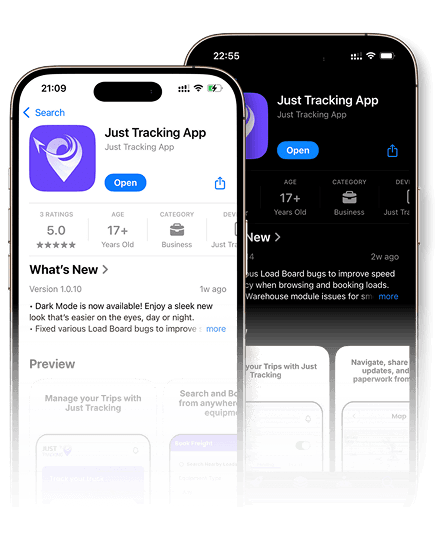
Brokers can use it to post loads, find available trucks, connect with carriers through direct messages and live chats, review market-rate information, and manage shipment tracking.
The platform also supports trip-related documents and communication, helping brokers stay connected after the load is booked.
And unlike tools that require an additional subscription before brokers can explore their features, Just Tracking is free to use.
The benefit isn't simply having another place to post freight.
It's having another way to reach available carriers, develop working relationships, and keep information organized from booking through delivery.
Explore Just Tracking to see how the platform can fit alongside the tools you already use.
Final thoughts: Cover smarter, not just faster
Fifteen minutes isn't a magic number.
Some spot loads can be covered in five minutes. Others require several hours of searching, negotiation, and coordination.
What matters is having a repeatable process that helps you recognize the right opportunity quickly without skipping the checks that protect your shipment and your margin.
Know your lane. Understand the rate. Reach available carriers directly. Verify who you're working with. Confirm the details before dispatch.
And perhaps most importantly, build relationships that make the next load easier than the last.
Because in spot freight, the real advantage isn't always finding the cheapest truck.
It's finding the right truck, at a defensible rate, before time runs out.
Frequently asked questions
What is spot freight in trucking?
Spot freight refers to shipments arranged individually at rates negotiated for a specific movement, rather than under an established long-term contract. Rates are influenced by capacity, equipment type, market conditions, distance, and pickup requirements.
How can freight brokers cover loads faster?
Brokers can reduce coverage time by confirming shipment details early, comparing lane rates, contacting trusted carriers, searching available trucks, and communicating directly with qualified carriers. Maintaining repeat-carrier relationships can also reduce the time required for future bookings.
Can a broker really cover a spot load in 15 minutes?
Yes, some straightforward shipments can be covered within 15 minutes when capacity is available, the details are complete, and a qualified carrier can be confirmed promptly. It isn't a guaranteed timeframe, particularly for difficult lanes, specialized equipment, or urgent pickups.
How do brokers avoid overpaying for spot freight?
Compare recent lane rates, consider current capacity conditions, account for deadhead and accessorial costs, and establish a target carrier rate before negotiating. The cheapest quote should not automatically win if it introduces significant service or compliance risks.
What tools help brokers find available carriers?
Freight brokers commonly use load boards, carrier networks, available-truck maps, messaging platforms, and transportation management systems. Just Tracking combines load posting, available-truck discovery, direct carrier communication, and load tracking in a free platform.
Read also: How to get your loads posted and tracked