The trucking industry is entering 2026 with a clear shift in priorities. After years of rate volatility, capacity exits, and rising operating costs, carriers and dispatchers are no longer asking where to find loads — they’re asking how to find the right loads, faster, without adding more overhead.
That’s why free load boards are no longer a “backup option.” In 2026, they’re becoming a core operational tool for dry van, reefer, flatbed, cargo van, and sprinter van operators across the USA.
This guide breaks down:
- What truly defines a free load board in 2026
- Which equipment types benefit most
- What to watch out for
- And how carriers, OTR drivers, and dispatchers can stay competitive without paid subscriptions
What Is a Free Load Board in 2026?
A free load board allows carriers and drivers to search, view, and book freight without mandatory monthly fees. However, not all “free” load boards are created equal.
In 2026, a real free load board should include:
- Open access to live freight
- Coverage across multiple equipment types
- Broker contact visibility
- Lane and market transparency
- No paywalls to basic functionality
Many platforms advertise free access but restrict:
- Load details
- Broker information
- Booking actions
- Market data
These limitations slow dispatch decisions and reduce profitability — which is exactly what modern carriers are trying to avoid.
Why Free Load Boards Matter More Than Ever in 2026
The U.S. trucking market is still recalibrating. According to industry forecasts, 2026 is shaping up as a transition year, where efficiency, visibility, and speed outweigh pure rate chasing.
Key market realities driving free load board adoption:
- Smaller fleets and owner-operators continue to dominate capacity
- Dispatch teams are managing more freight with fewer resources
- OTR drivers demand flexibility and faster booking
- Cargo van and sprinter van operators are scaling rapidly in urban lanes
Paid load boards remain useful, but carriers increasingly rely on free platforms to diversify freight sources, reduce dependency, and protect margins.
Equipment Types Covered on Free Load Boards
Dry Van Loads
Dry van remains the most active segment in the U.S. trucking industry.
Common dry van freight in 2026 includes:
- Retail replenishment
- Consumer goods
- Food-grade packaged freight
Dry van operators benefit most from load boards with high daily volume and nationwide coverage, especially in states like Texas, California, Florida, Illinois, and Georgia.
Reefer Loads
Reefer freight continues to command premium rates, particularly on:
- Produce lanes
- Pharmaceutical shipments
- Cold-chain retail freight
A quality free load board should allow reefer carriers to:
- Filter by temperature requirements
- Identify seasonal surges
- Track lane demand shifts
Visibility is critical, missed timing equals lost revenue.
Flatbed Loads
Flatbed freight remains closely tied to:
- Construction activity
- Infrastructure spending
- Energy and industrial projects
Flatbed operators benefit from load boards that show:
- Load dimensions
- Specialized equipment needs
- Regional demand concentration
Cargo Van & Sprinter Van Loads
One of the fastest-growing segments going into 2026.
Cargo and sprinter van operators rely heavily on:
- Short-haul and regional freight
- Time-sensitive deliveries
- Urban and last-mile logistics
Free load boards with real-time availability give these operators a major competitive edge.
A Practical Note for 2026 Carriers and Dispatchers
As free load boards continue to play a bigger role in daily operations, some platforms are going beyond listings alone.
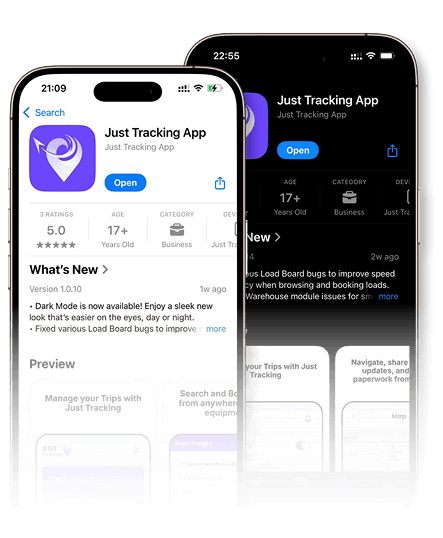
Just Tracking offers a completely free load board as part of a broader trucking ecosystem — giving carriers, dispatchers, OTR drivers, and fleet operators access to:
- Live loads across all equipment types, including cargo and sprinter vans.
- Nationwide coverage across U.S. lanes
- Real-time visibility tools, live tracking, and trip management
- Market insights to support smarter lane decisions
There are no subscriptions or monthly fees, making it a practical option for operators who want access to freight without adding overhead in 2026.
As the industry moves toward more transparent, tech-driven workflows, platforms that combine free access with operational visibility are increasingly becoming part of how modern trucking gets done.
Looking Ahead
The next wave of trucking growth will be driven by information access, operational speed, and smarter decision-making.
The question isn’t whether to use a free load board - It’s which one actually works for your operation.