Explore how AI in freight dispatching actually works. From automated load matching to predictive tracking, see what's real, what's hype, and how dispatchers adapt.
If you scroll through LinkedIn or open a logistics newsletter, you’d think dispatchers are about to go the way of the fax machine.
Silicon Valley start-ups present a polished vision: an autonomous, "self-driving" back office where AI algorithms negotiate high-paying loads, assign drivers, recalculate routes in milliseconds, and manage customer check-calls—all without a human ever touching a keyboard.
Then you talk to an actual dispatcher managing 25 trucks on a rainy Friday afternoon in November.
They’re dealing with a driver who just blew a tire on Interstate 80, a broker refusing to pay detention at a crowded distribution center, and a shipper whose loading dock is two hours behind schedule. In that world, an over-hyped chatbot telling a driver to "have a safe trip" isn't just useless—it's infuriating.
So, where does the truth lie?
As AI adoption scales across the supply chain—with 29% of carriers actively using AI in load acceptance and dispatching, and 72% of fleet executives planning to adopt it—we need to separate the marketing noise from reality. Here is a clear look at what AI in freight dispatching actually does, where the hype falls flat, and how the role of the dispatcher is changing.
The Hype: What Vendors Promise vs. The Ground Reality
The marketing machine surrounding AI in transportation often promises full-scale automation. But freight isn't code executing on a pristine server; it's heavy machinery moving through physical unpredictability.
Hype #1: "AI will replace freight dispatchers entirely."
The Reality: AI is an administrative co-pilot, not a replacement. While generative models and predictive analytics can process mountains of telematics, rate histories, and load-board posts in seconds, they lack human negotiation leverage, context, and emotional intelligence.
A machine can suggest the mathematically optimal load, but it can't reassure a frustrated driver who wants to get home for his kid’s weekend baseball game. Research indicates that AI tools cut the administrative workload of logistics coordinators by 10% to 20%, freeing up dispatchers to focus on driver retention, broker relationships, and high-stakes problem-solving.
Hype #2: "Autonomous AI agents will negotiate rates better than humans."
The Reality: AI provides speed and price floor intelligence, but humans close the deal. AI tools can automatically query real-time lane rates from databases, evaluate load-to-truck ratios, compute fuel/toll overhead, and draft a counter-offer email to a broker in 3 seconds. However, total autonomous negotiation fails when market nuances arise.
If a broker has a reputation for late payments or long dwell times, an experienced dispatcher knows to price in a buffer. Current carrier-first AI platforms keep a "human in the loop"—the AI prepares the rate calculation and email draft, but the dispatcher reviews and hits send.
Hype #3: "AI eliminates empty miles automatically."
The Reality: AI optimizes matching, but physical capacity mismatches remain. In Europe and North America, roughly 20% to 25% of all truck kilometers are still driven completely empty. AI algorithms assist in aggregating capacity and analyzing historic lane demand to reduce deadhead, but they cannot invent backhaul freight out of thin air in economically depressed regions.
What AI Actually Does in Daily Freight Dispatching
Strip away the pitch deck buzzwords, and practical AI solutions focus on four labor-intensive tasks: email processing, predictive tracking, paperwork verification, and multi-variable load matching.
1. High-Speed Email Parsing & Response Drafting
The average dispatcher spends hours sorting through hundreds of inbound emails from brokers, searching for rate confirmations, or sending routine status updates.
- How AI helps: Modern NLP (Natural Language Processing) models parse incoming emails, extract key details (origin, destination, weight, pickup windows, rate offer), match them against driver availability, and pre-draft a response. Dispatchers approve or adjust responses instead of typing every message from scratch.
2. Intelligent Load Scoring (Beyond Rate-Per-Mile)
Traditional load searches filter by basic criteria: origin, destination, and gross pay.
- How AI helps: AI load-matching engines evaluate hundreds of variables simultaneously. They score a load based on:
- Real-time market rates vs. spot historical averages.
- Estimated driver Hours of Service (HOS) remaining upon arrival.
- Projected fuel and toll costs along that exact route.
- The likelihood of securing a profitable backhaul at the destination.
3. Predictive Disruption Tracking
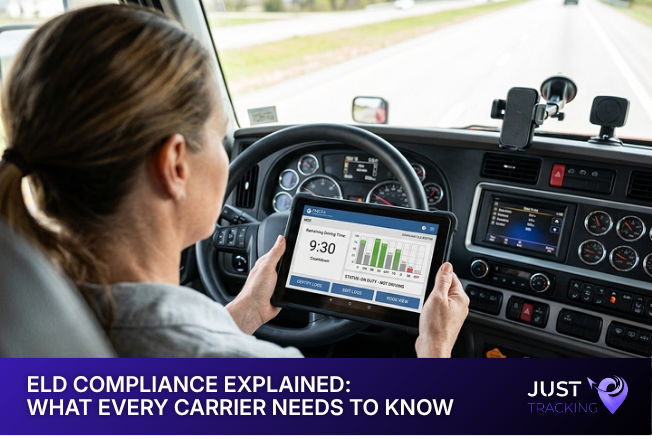
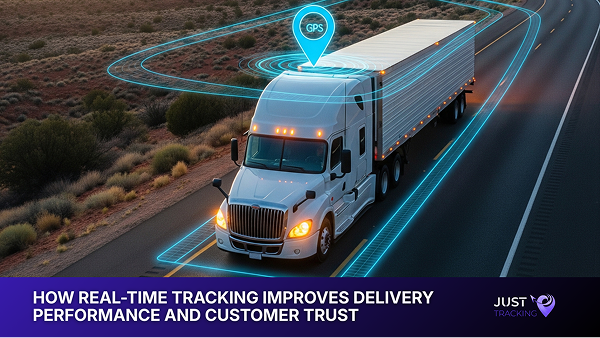
Instead of waiting for an Electronic Logging Device (ELD) or GPS ping to show a truck stuck in traffic, predictive AI models monitor live weather, highway corridor congestion, and historical loading dock delay patterns.
- How AI helps: If a receiver historically takes 4 hours to unload a trailer on Friday afternoons, the AI flags a downstream detention risk hours in advance. The dispatcher can notify the driver or alert the broker to reschedule appointments before an SLA violation occurs.
4. Automated Paperwork & Billing Verification
Discrepancies between Rate Confirmations, Bills of Lading (BOL), and Proof of Delivery (POD) stall cash flow.
- How AI helps: Optical Character Recognition (OCR) paired with machine learning checks documents for missing signatures, weight discrepancies, wrong addresses, or unbilled detention fees. Catching these mismatches before billing prevents lengthier payment disputes later.
Why the "Human in the Loop" Model Wins
The most effective fleets aren't replacing dispatchers with software; they are augmenting them.
When dispatchers are freed from administrative clutter—entering data into a Transportation Management System (TMS), checking ELD pings manually, or drafting repetitive emails—their capacity expands. Instead of struggling to handle 10 to 12 trucks, a single dispatcher using AI tools can manage 20 to 25 trucks without an increase in burnout.
"Technology handles the data-heavy, repetitive mechanics of dispatching—monitoring, sorting, flagging, and calculating. Human dispatchers supply the judgment, relationship management, and adaptability that keep fleets running smoothly when reality diverges from the plan."
The transition happening in freight dispatching isn't a story of human versus machine. It's a story of dispatchers equipped with intelligent tools outperforming those who rely solely on spreadsheets, sticky notes, and manual phone calls.