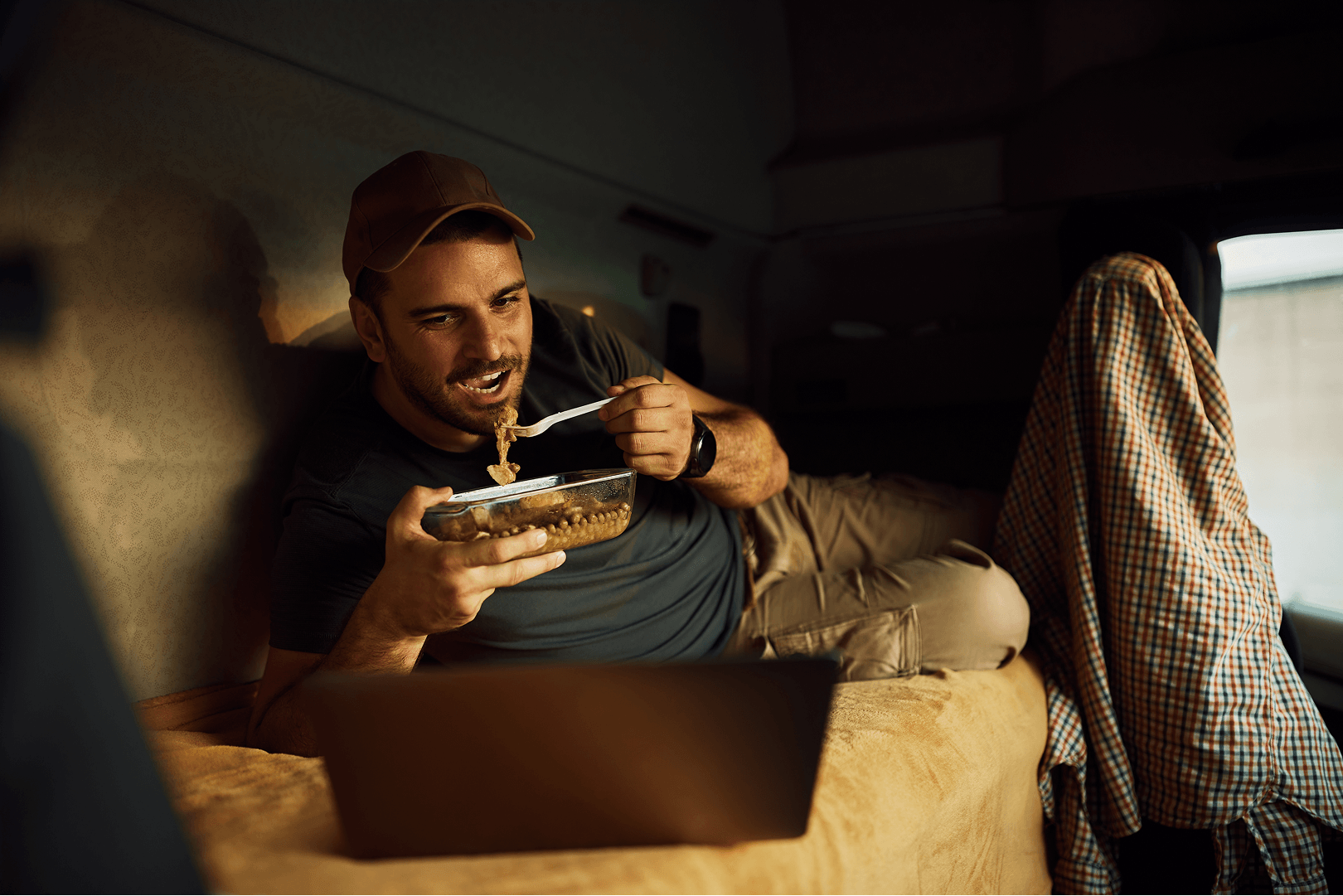
Fuel your body for the long haul. Discover practical healthy eating tips for truck drivers, backed by CDC stats. Learn how to set up an in-cab kitchen, master grocery store runs, avoid energy drink crashes, and protect your DOT medical card.
The hard data from the CDC and the National Institute for Occupational Safety and Health (NIOSH) reveals a startling reality: 69% of long-haul truck drivers are classified as medically obese, and 14.4% suffer from Type 2 diabetes, a rate more than double the average American working adult. Even worse, between 26% and 40% of drivers deal with hypertension.
For a CDL holder, these aren't just abstract medical stats. Blood pressure spikes or uncontrolled blood sugar can instantly trigger a failed DOT physical, downgrade your medical certification, and take you off the road.
The highway environment is fundamentally designed to make you fail: endless miles of "food swamps," deep-fried truck stop buffets, high-sodium roller grills, and 200-calorie sugar-laden energy drinks. But running OTR doesn't mean you're forced to live on fast food.
Here is the practical, ground-level strategy for eating healthy, keeping your energy high, and protecting your CDL on the open road.
1. The In-Cab Kitchen Revolution: Invest in the Right Gear
The biggest mistake drivers make is relying on truck stops for three meals a day. Non-fuel sales generate the vast majority of a truck stop's profit, and high-margin, ultra-processed foods are engineered to trigger cravings while leaving you exhausted two hours later.
To break free from truck stop food, your cab needs to function as a micro-kitchen.
The Essential Trucker Kitchen Stack
- A Quality Power Inverter (1500W–2000W): The foundational piece of equipment that allows you to run home appliances without blowing fuses.
- A 12-Volt Refrigerator or Compressor Cooler: Ditch the cheap cooler that requires fresh ice every two days. A dedicated 12V fridge keeps fresh produce, lean meats, and dairy at safe temperatures continuously.
- An Electric Air Fryer or Instant Pot: An air fryer lets you cook chicken breasts, turkey burgers, and roasted vegetables in under 15 minutes with virtually zero mess. An Instant Pot allows you to throw in ingredients in the morning and have a hot, nutrient-dense stew ready when your 11-hour clock runs out.
2. Master the "Supermarket Run" Strategy
The easiest way to eat clean on the road is to change where you buy your fuel for your body, not your truck.
"If you only buy food where you buy diesel, you are guaranteed to eat processed junk. The most profitable habit an OTR driver can build is pulling into a Walmart Supercenter or regional grocery store once a week."
Many large grocery stores near major freight corridors offer accessible truck parking or easy pull-in access along service roads. Spending $100–$150 a week at a grocery store buys you fresh food that would easily cost $350+ at a truck stop counter.
Truck Stop Buffet ($25/day) ➔ High Sodium & Energy Crashes ➔ DOT Physical Risks
VS
Grocery Stock-Up ($15/day) ➔ High Protein & Clean Fuel ➔ Maximum Energy & Stable Blood Pressure
3. Meal Structure: The "Protein + Fiber" Formula
When you sit in a driver's seat for 10 hours straight, your body doesn't burn through heavy carbohydrates the way a construction worker does. Consuming high-glycemic carbs (like giant muffins, white bread, or french fries) causes massive insulin spikes followed by severe fatigue the dangerous "afternoon slump" behind the wheel.
To keep your blood sugar stable and maintain mental sharpness, every meal and snack should follow a simple rule: Combine Lean Protein with High Fiber.

4. The Hydration Trap: Ditching the Energy Drink Cycle
Driver fatigue is often just severe dehydration in disguise. When you sit in a climate-controlled cab with air blowing all day, you lose fluids fast. Reaching for a high-caffeine energy drink or sugary soda provides a brief 30-minute high followed by a punishing fatigue crash.
- The Rule: Keep a gallon jug or insulated water bottle on your passenger seat. Drink a full glass of water before every meal or snack.
- The Electrolyte Fix: If you need flavor or a boost, use sugar-free electrolyte powders or zero-calorie flavor drops instead of energy drinks loaded with 40+ grams of sugar.
5. Planning Healthy Stops with Technology
Eating healthy on the road requires intention, and intention requires planning. If you wait until your HOS clock has 10 minutes left before thinking about dinner, you are going to end up eating whatever fast food window is closest to the highway exit.
This is where integrating your route planning with modern management tools changes the game. When drivers use an intuitive, integrated navigation and logistics platform like Just Tracking, mapping out your day isn't a stressful guessing game. You can plan your fuel windows, align your mandatory 30-minute break with a grocery store or clean rest stop, and avoid getting trapped in highway food deserts.
The Bottom Line
You don't need to overhaul your entire lifestyle overnight. Start small: buy a small cab cooler, swap out your morning energy drink for water, and stock up on clean snacks for your next run. Protecting your health is the single best investment you can make to keep your CDL active, your energy high, and your career moving forward for the long haul.