Don't overpay the IRS. Discover key tax deductions, write-offs, and strategies every owner-operator needs to keep more money in their pocket.
Running your own trucking business is great — you choose your loads, your schedule, and your income.
But there’s one part almost every driver hates: taxes.
The good news? Taxes don’t have to be scary. If you keep good records and know what you can write off, you can save a lot of money every year. Many drivers say that once they understood deductions, they started keeping thousands more in their pockets.
This quick guide breaks everything down in simple steps.
Why Taxes Matter
If you’re an owner-operator, nobody takes taxes out of your paycheck.
You have to pay them yourself — and if you don’t plan ahead, tax season hits hard.
But if you track your expenses and understand deductions, you can cut your tax bill down (sometimes by a lot).
What Taxes You Pay
1. Self-Employment Tax
This covers Social Security and Medicare.
The rate is 15.3%. Company drivers have this taken out automatically — owner-operators pay it themselves.
2. Federal & State Income Tax
You may also have to pay taxes to your state (depending on where you live).
Most drivers make quarterly tax payments to avoid penalties.
The Most Common Tax Deductions for Truckers
These are things you can subtract from your income so you pay less tax.
Drivers say this is the part that saves them the most money.
1. Insurance
You can deduct trucking-related insurance like:
- Liability
- Cargo
- Health insurance
- Occupational accident
2. Phone & Internet
If you use your phone for work (calls, load boards, maps):
Deduct the business portion.
Example: If you use your phone 70% for business, you deduct 70% of the bill.
3. Fuel & Maintenance
Fuel, oil changes, brakes, tires — all deductible.
Keep receipts or use apps that save them automatically.
4. Equipment
If you buy tools, GPS, dashcams, or even a truck — you may be able to deduct all or part of it.
5. Training
If you pay for classes, safety training, or courses related to trucking — also deductible.
6. Per Diem (Meals)
When you’re on the road, you can deduct 80% of your daily meal rate.
For 2024, the per diem is $80/day.
7. Other Useful Deductions
- Truck repairs
- Tolls & parking
- Accounting services
- Business loan interest
- Supplies
- Permits
- DOT physical
Many drivers don’t realize how much adds up — and end up paying more tax than they should.
Big Tax Myths (Drivers Talk About These All the Time)

How to Keep Good Records (This Is Where Most Drivers Struggle)
Good recordkeeping = fewer headaches + lower taxes.
Do this:
✔ Keep all receipts
Paper or digital — doesn’t matter.
Take photos and store them in folders.
✔ Track business vs personal spending
A separate business card helps a lot.
✔ Keep mileage records
You need these for per diem and other deductions.
✔ Use technology
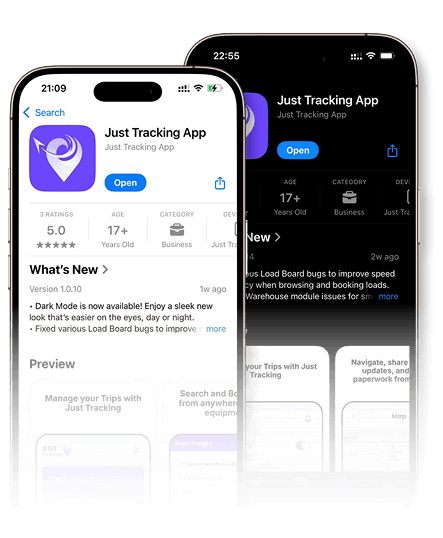
This is where Just Tracking helps.
While Just Tracking is mainly for load management, tracking, and operations, many carriers said that having all trip info, miles, and load details in one place makes tax prep easier.
What About Per Diem?
Per diem = money the IRS allows you to spend on meals while away from home.
Full rate for 2024: $80/day
You can deduct 80%, which equals $64/day.
Drivers who stay on the road most of the year save thousands using per diem.
Depreciation (Easy Version)
If you buy a truck, you usually can’t deduct the full cost in one year.
The IRS spreads the deduction over several years — this is depreciation.
There are two ways:
- Straight-line (same amount every year)
- Accelerated (bigger deduction at the beginning)
Ask a tax pro which one saves you more.
Ways to Lower Your Taxes
1. Work with a tax professional
Truckers who use pros often save more money than the cost of the service.
2. Save for retirement
Some retirement accounts reduce your taxable income.
3. Track work-related miles on your personal vehicle
Bank runs, picking up supplies, mechanic trips — these count.
4. Look for tax credits
School, training programs, and some fuel credits can save money.
IRS Audits (Don’t Panic)
Audits are usually just the IRS checking your receipts.
Keep records for at least 3 years.
Most drivers are fine if they have good documentation.
Final Takeaway
Taxes are part of the job, but they shouldn’t overwhelm you.
The key is simple:
Track everything, save your receipts, and know your deductions.
A transportation management platform like Just Tracking helps you manage your business more cleanly — which makes tax prep easier, keeps your records organized, and helps you save money you might otherwise miss.