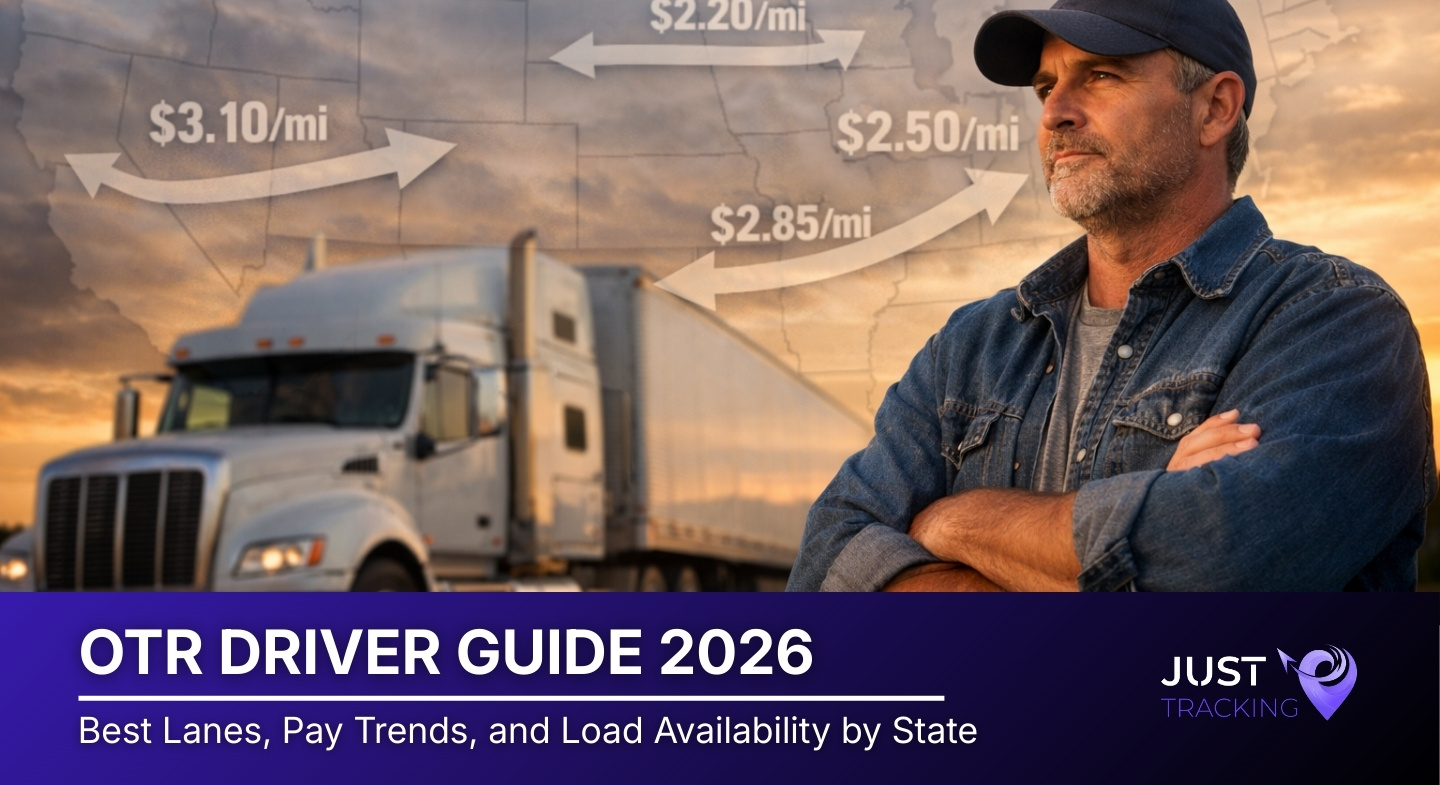
Explore the 2026 OTR driver guide with the best freight lanes, pay trends, and load availability by state across the USA. Insights for CDL truck drivers in dry van and reefer.
What Every OTR Driver Should Know in 2026
If you’re an OTR driver in 2026, you already know the market doesn’t stay the same for long. Rates move, fuel prices change, and some states stay busy while others slow down. The difference between a strong week and a frustrating one often comes down to where you run and how well you understand the freight market in the USA.
This guide is built for real truck drivers who want clear, practical information. We’ll look at which lanes are paying best, where load availability is strongest by state, and how dry van and reefer freight compare this year. Whether you’re a new CDL holder or an experienced driver planning your next move, knowing where the freight is and where it’s going, can help you make smarter decisions in 2026.
OTR Pay Trends in 2026: What’s Changed?
In 2026, OTR driver pay across the USA is stabilizing after the volatility of previous years. While rates are not at record highs, they remain competitive in high-demand corridors.
Average OTR Pay Overview
- Company OTR drivers: $0.58–$0.72 per mile depending on experience and region
- Owner-operators: Gross revenue averages $1.85–$2.45 per mile (before expenses)
- Reefer lanes: Typically 5–15% higher than dry van due to temperature control and urgency
- Specialized CDL endorsements (hazmat, tanker): Continue to command premium rates
The key takeaway for every truck driver in 2026: lane selection matters more than ever. High-paying freight is concentrated in specific states and trade corridors.
Best OTR Freight Lanes in the USA (2026)
Freight volume is driven by manufacturing hubs, ports, agriculture, and retail distribution. Here are the strongest OTR lanes in 2026:
1. Texas to Midwest (TX → IL, OH, IN)
Texas remains one of the strongest freight markets in the USA. Houston, Dallas, and San Antonio generate consistent outbound loads.
- High availability of dry van freight
- Strong reefer demand for food distribution
- Reliable reload opportunities in Midwest manufacturing states
Why it works: Balanced inbound and outbound freight reduces deadhead miles.
2. California to Southeast (CA → GA, FL, NC)
Despite regulatory challenges, California continues to produce massive freight volumes.
- High-paying outbound loads from Los Angeles and Oakland
- Strong retail and e-commerce freight
- Reefer demand for produce shipments
Caution: Drivers must factor in emissions regulations and compliance costs in California.
3. Midwest Manufacturing Loop (IL → MI → OH → PA)
The industrial heartland remains a reliable OTR region in 2026.
- Steady automotive and industrial parts freight
- Shorter turnaround times
- High consistency for dry van CDL drivers
This region is ideal for truck drivers seeking stability rather than extreme long-haul distances.
4. Southeast Regional Surge (GA, FL, TN, SC)
The Southeast has emerged as one of the fastest-growing freight markets in the USA.
- Port freight from Savannah and Jacksonville
- Consumer goods and distribution center freight
- Strong reefer demand during produce seasons
OTR drivers operating in this region benefit from growing population-driven demand.
Load Availability by State: Where Freight Is Strongest
In 2026, load availability is concentrated in economic growth zones.
High-Volume Freight States
Texas – Energy, manufacturing, cross-border trade
California – Ports, imports, retail
Illinois – Central distribution hub
Georgia – Southeast logistics powerhouse
Florida – Reefer-heavy produce and retail
These states offer consistent load boards filled with both dry van and reefer freight.
States with Seasonal Opportunities
- Washington & Oregon: Produce and agriculture cycles
- Florida: Winter produce boom
- Midwest states: Peak retail and holiday distribution
Reefer CDL holders especially benefit from understanding these seasonal patterns.
Strategic Tips for OTR Drivers in 2026
1. Follow the Freight, Not Just the Rate
A high-paying load into a weak market can hurt overall weekly revenue. Focus on states with strong reload potential.
2. Reduce Deadhead Miles
The most profitable OTR truck drivers track lane balance and avoid freight deserts.
3. Monitor Fuel Price Regions
States like California and parts of the Northeast have higher fuel costs. Adjust route planning accordingly.
4. Upgrade Your CDL Skill Set
Hazmat, tanker, or doubles/triples endorsements increase flexibility and pay opportunities.
5. Leverage Real-Time Load Platforms
Using technology to identify high-volume states and trending lanes gives drivers a competitive edge.
The Future Outlook for OTR Drivers in the USA
Looking ahead through late 2026 and into 2027:
- E-commerce will continue driving dry van growth
- Cold-chain logistics expansion will support reefer demand
- Southern and Midwest states will remain freight leaders
- Cross-border freight with Mexico will increase, especially in Texas
For any OTR driver, the opportunity remains strong, but success will favor those who operate strategically rather than reactively.
Conclusion: Position Yourself for Profit in 2026
The freight landscape in the USA in 2026 is dynamic but opportunity-rich. The most successful truck drivers are those who understand lane economics, monitor load availability by state, and diversify their CDL capabilities.
Texas, California, Illinois, and Georgia remain freight anchors. Reefer continues to outperform dry van in high-demand regions. And balanced lanes are the difference between steady revenue and wasted miles.
If you want to maximize your performance as an OTR driver in 2026, the formula is clear:
Follow demand. Stay flexible. Think long-term.